
why does my dog throw up hours after eating? Causes & Fixes.
It’s a worrying moment for dog owners when their pet vomits after a meal. Many wonder what causes this. It’s important to understand to care for your dog right.
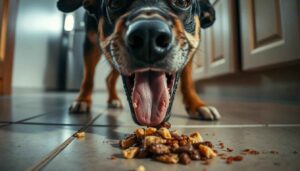
Vomiting in dogs can be a symptom of various health issues. When your dog throws up hours after eating, it might show a problem with their digestive system. Or it could be a sign of a more serious condition. We’ll look at why dogs vomit after meals and how to help them feel better.
Understanding Delayed Vomiting in Dogs
Vomiting in dogs can happen right after they eat or later. It’s important to understand why this happens. Delayed vomiting can be confusing for pet owners, as it doesn’t always link to the food they ate. Sometimes it’s caused by eating too fast, digestive issues, or underlying health conditions. When you ask yourself, “Why does my dog throw up hours after eating?”, it’s often a sign to look deeper. Keeping notes of meals and symptoms helps your vet identify the cause more effectively.
Difference Between Regurgitation and Vomiting
It’s key to know the difference between regurgitation and vomiting. Regurgitation is when food comes back up without effort, soon after eating. On the other hand, vomiting is when the stomach pushes food out, often with retching and stomach contractions. Knowing this helps in figuring out digestive problems in dogs.

Why Timing Matters in Diagnosing Dog Digestive Issues
The time when vomiting happens is very important. Vomiting hours after eating might mean problems like foreign bodies in the stomach, inflammatory bowel disease, or food allergies. Things to watch for include:
- The frequency and consistency of vomit
- The presence of blood or other unusual substances
- Changes in appetite or behavior
By paying attention to these signs, vets can find out why dogs vomit later.
Why Does My Dog Throw Up Hours After Eating? Common Causes
When dogs throw up hours after eating, it often shows a health issue that needs attention. It’s important for dog owners to understand the causes to give the right care.
Digestive System Problems
Several digestive issues can lead to vomiting in dogs. These include:
- Gastritis and Stomach Inflammation: Inflammation of the stomach lining can cause vomiting.
- Food Allergies and Sensitivities: Dogs can develop allergies or sensitivities to certain food ingredients, leading to vomiting.
Serious Medical Conditions
Some serious health conditions can also cause delayed vomiting:
- Pancreatitis and Bile Issues: Pancreatitis or problems with bile production can lead to severe vomiting.
- Intestinal Blockages and Obstructions: Blockages in the intestines can cause vomiting hours after eating.
Behavioral Factors
Behavioral issues can also contribute to vomiting:
- Eating Too Fast or Too Much: Gobbling food quickly or overeating can lead to vomiting.
- Stress and Anxiety During Mealtime: Stress during meals can cause digestive upset.

To find the exact cause, watch your dog’s behavior, eating habits, and health. It’s crucial to consult a vet for a proper diagnosis and treatment plan.
Effective Solutions to Stop Your Dog from Vomiting After Meals
Dog owners can help their pets feel better after meals. They can change their dog’s diet, use slow feeders, and make sure they drink enough water. Finding out why your dog is vomiting is key to their health. Many ask, “Why does my dog throw up hours after eating?”, and often small adjustments work. Consistent routines, vet visits, and slow dietary changes can ease the problem. Paying attention to your dog’s eating habits helps you prevent discomfort and improve long-term health.
Dietary Adjustments
Changing your dog’s diet is a big step. You might need to change food types and ingredients to find something they can handle. High-quality food with fewer fillers is easier to digest. When you wonder, “Why does my dog throw up hours after eating?”, the answer often lies in diet. Adding probiotics may strengthen digestion. Introducing new foods slowly avoids stomach upset. Keeping a food journal helps track patterns and identify ingredients causing vomiting.
Changing Food Types and Ingredients
Some dogs react badly to certain foods. Moving to a hypoallergenic diet or a new protein can help stop vomiting. Switching from chicken to fish or lamb can make a difference. Asking “Why does my dog throw up hours after eating?” often reveals hidden sensitivities. Grain-free or limited-ingredient diets may also help. Reading labels carefully avoids additives. Introduce changes slowly to let the stomach adjust without causing more issues.
Meal Frequency and Portion Control
Changing how often and how much you feed your dog can also help. Smaller, more frequent meals might stop vomiting. Large meals can overwhelm the stomach and cause regurgitation. If you’ve wondered, “Why does my dog throw up hours after eating?”, portion control may be the key. Feeding 3–4 smaller meals improves digestion. Tracking responses to different schedules helps find what works best. Consistency in feeding prevents stress and supports better digestion.
Environmental Changes
It’s important to make eating a calm experience for your dog. Use slow feeders and puzzle bowls to prevent gulping. Stress at mealtime often triggers fast eating and later vomiting. Pet parents asking “Why does my dog throw up hours after eating?” often find solutions in the environment. Feeding in quiet spaces helps dogs eat slowly. Creating calm routines reduces stomach upset, builds healthier eating habits, and supports long-term wellness.
Using Slow Feeders and Puzzle Bowls
Slow feeders and puzzle bowls help slow eating and reduce vomiting. Dogs that gulp food quickly often suffer bloating and stomach upset later. If you ask, “Why does my dog throw up hours after eating?”, this tool may help. Puzzle feeders also give mental stimulation, making meals enjoyable. These bowls are useful for large breeds prone to bloating. A simple switch in feeding accessories can lead to big health improvements.
Creating a Calm Eating Environment
Make sure your dog eats in a quiet, stress-free area. Avoid feeding near loud noises or during stressful times. If you have multiple pets, feed them separately to prevent rushing. Many who ask, “Why does my dog throw up hours after eating?”, find the answer lies in the eating environment. Dogs that eat calmly digest food better. Over time, relaxed mealtimes reduce vomiting and support healthier habits.
Home Remedies and Care
There are also home remedies to try. Temporary fasting followed by reintroducing bland food can help. Simple meals like boiled chicken and rice soothe irritation. If you wonder, “Why does my dog throw up hours after eating?”, these remedies may help in mild cases. Pumpkin or slippery elm can aid digestion too. Always check with a vet before trying remedies. Persistent vomiting signals deeper health issues needing medical care.
Temporary Fasting and Reintroducing Food
Always talk to your vet before fasting your dog. Start with small, bland meals when reintroducing food. Skipping one meal lets the stomach settle. If you ask, “Why does my dog throw up hours after eating?”, fasting may help but should be done carefully. Gradually reintroducing food prevents irritation. If vomiting continues even after fasting, consult your vet for further testing and treatment.
Maintaining Proper Hydration
Make sure your dog always has fresh, clean water. Hydration is key for digestion and recovery. Dogs that vomit lose fluids, leading to weakness and dehydration. Many asking “Why does my dog throw up hours after eating?” forget hydration’s role. Place water bowls around your home or use pet fountains. Adding water to food or giving ice cubes encourages drinking. Keeping your dog hydrated helps digestion and overall health.
Conclusion: When to See a Veterinarian
Knowing when to get your dog to the vet is key. If your dog is vomiting bile or keeps throwing up, it’s time to see a vet. This helps avoid serious health problems.
Watch your dog closely for signs like being very tired, not wanting to eat, or trouble swallowing. These could mean something serious is wrong. Knowing when to take your dog to the vet is crucial for their health.
By understanding the reasons behind your dog’s vomiting and acting quickly, you can help them feel better. This also stops future vomiting problems.
FAQ
Q1. What is the difference between regurgitation and vomiting in dogs?
Regurgitation is when dogs bring food back up without effort or pain, soon after eating. Vomiting is a stronger action that can happen hours later, often with discomfort.
Q2. Why does my dog throw up bile after eating?
Vomiting bile might mean your dog’s stomach is empty or has a serious issue like pancreatitis. It’s important to see a vet to check for health problems.
Q3. Can food allergies cause my dog to vomit after eating?
Yes, food allergies can make dogs vomit. Common culprits include beef, dairy, or soy. Talk to your vet about a special diet if you think this is the case.
Q4. How can I prevent my dog from vomiting after eating?
To stop vomiting, try feeding smaller meals more often or switching foods. Slow feeders or puzzle bowls can also help slow down eating.
Q5. When should I see a vet for my dog’s vomiting?
See a vet if your dog keeps vomiting, vomits blood or bile, or shows signs of dehydration. Also, if they seem tired or don’t want to eat, get help right away.
Q6. Can stress and anxiety cause my dog to vomit after eating?
Yes, stress and anxiety can make dogs vomit. Make mealtime calm and try to reduce stress to help.
Q7. What are some home remedies for dog vomiting?
Home remedies include fasting, then a bland diet, staying hydrated, and eating small meals. But, if vomiting doesn’t stop, see a vet for advice.
Q8. Can eating too fast cause my dog to vomit?
Yes, eating too fast can cause vomiting. Slow feeders or puzzle bowls can help your dog eat slower and avoid vomiting.